Why Kenyan Men Are Angrier at Women Than at the Thief at the Door

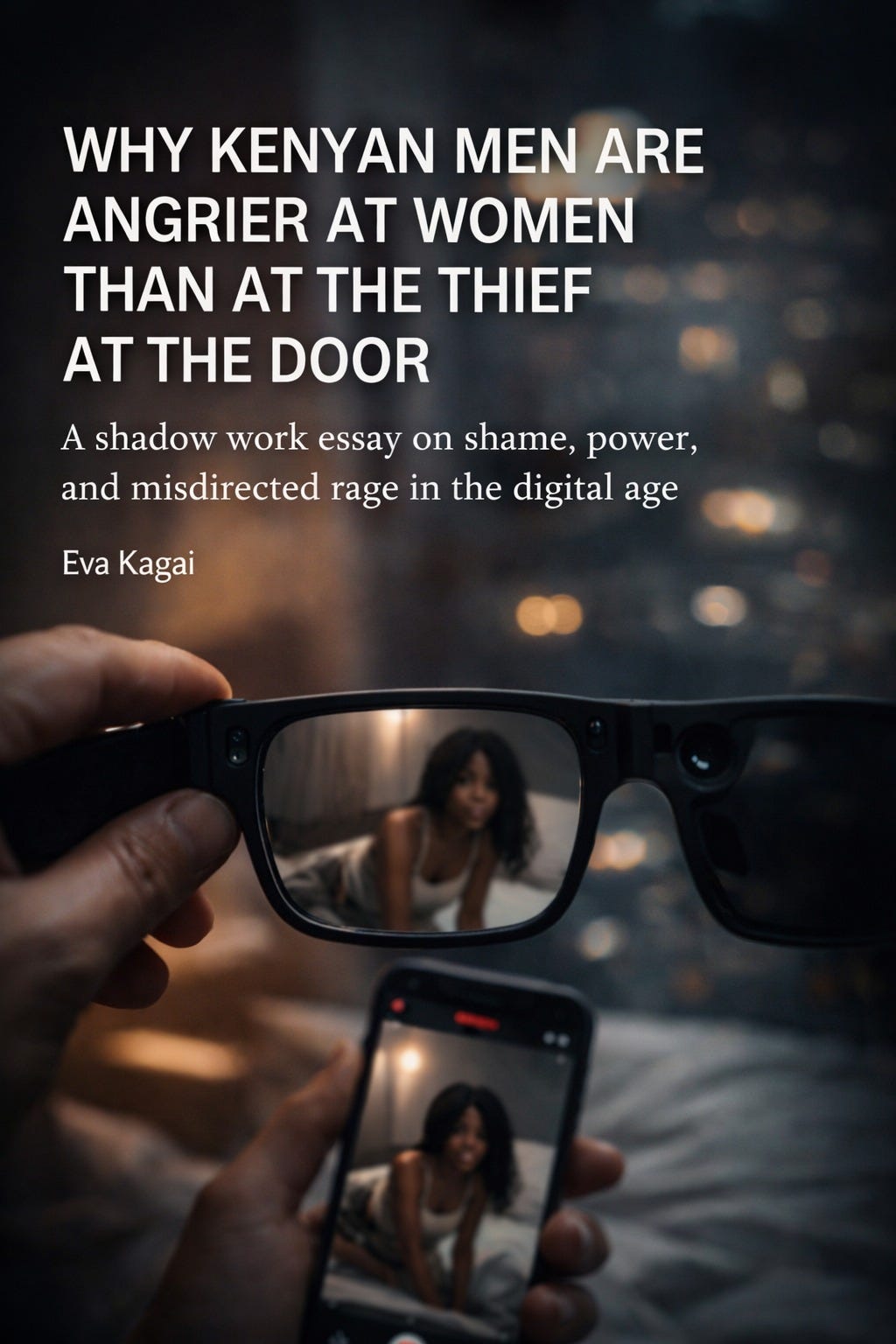
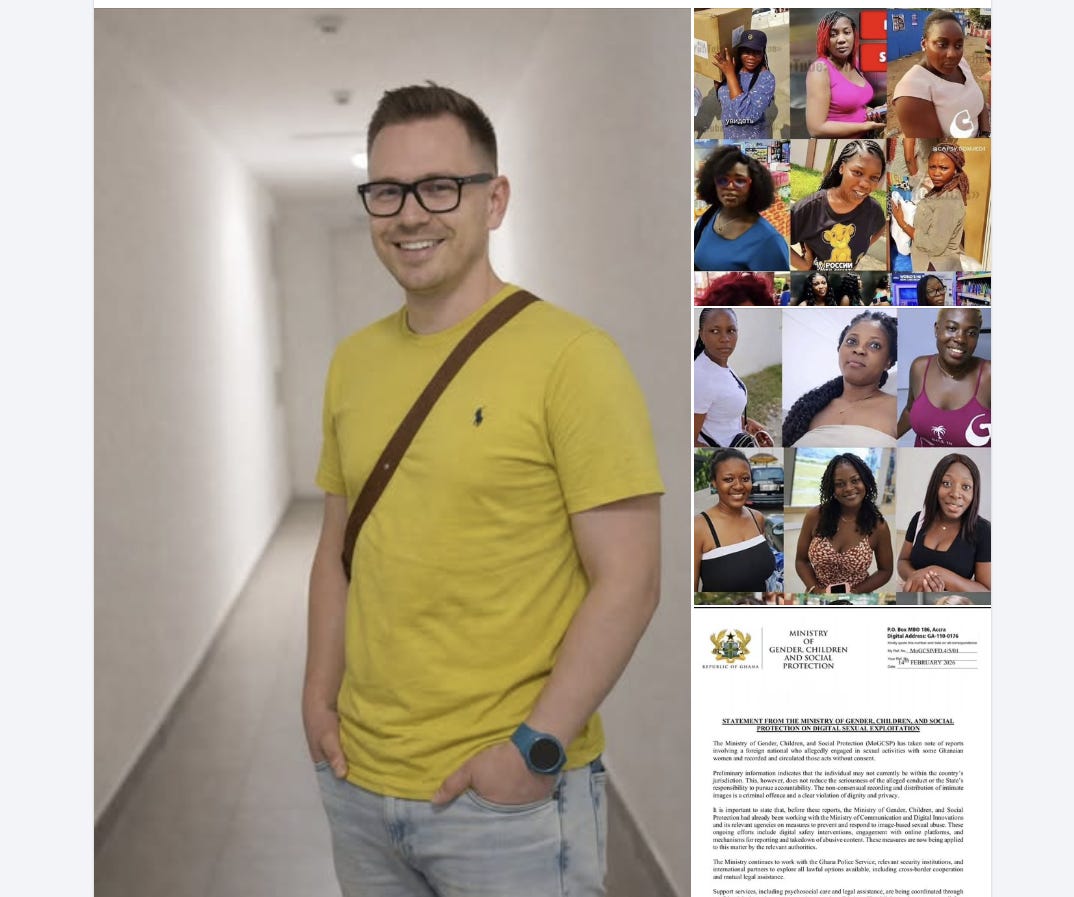
Yaytseslav, a Russian, had been systematically recording private encounters with women across Kenya and Ghana. Not Africa broadly. Kenya and Ghana specifically. He uses Ray-Ban smart glasses to record discreetly, shares clips for free on TikTok and YouTube, and then sells the full videos to paying subscribers on Telegram.
This is nothing new here in Kenya; just a few weeks ago, Marion Naipei, a Kenyan girl, met James Opande on Tinder. After months of chatting, they finally decided to meet at a local pub. "He is someone I knew and really trusted," she said.
That night, she was too drunk to notice he was recording her.
When the video went viral on Telegram, Marion found out on a Thursday morning from a friend's call. She was trending. When she confronted Opande, he denied it. Then he played victim: "It has also caused him problems, especially with his wife.
This is a pattern that has repeated time and again. The issue is that Women have become the target of the fallout from the story.
Their choices, their morality, their bodies examined. The men who recorded? They faded into the background while Kenyans took to social media to express outrage. Not at the crime, but at the women themselves.
But here's what's worth examining: why do we care more about defending our honor than defending our women?
The Distraction
When women are exploited in Kenya, our online spaces are split predictably.
Men respond to the crime with ridicule and silence. Women rush to defend the exploited, often having to defend themselves simultaneously. What rarely happens is sustained focus on consent, power, and accountability.
Instead, we get a gender war.
And that war is doing important work. Just not the kind we think. It's keeping us from seeing the actual thief.
Because while Kenyans argue about whether our women are "cheap" or our men are "protecting" them, a Russian man is harvesting our vulnerabilities and selling them to the world. He isn't dating. He's extracting.He identifies women in places where economic desperation is real. And he turns their private moments into content. He profits from our humiliation while we're too busy fighting each other to notice.
That's the trap. Divide and conquer. Classic colonization.
The Wound Beneath the Rage
But I want to go deeper into why men are angrier at women than at the extractor.
Because the rage isn't really about morality. It's about something older.
Many Kenyan men are experiencing a specific wound: the historical humiliation of being seen as inferior. Economic pressure that makes masculinity feel fragile. The unspoken terror of being bypassed. Socially, sexually, financially. By outsiders.
When a woman "chooses" a foreigner, when she accepts money from him, when she's willing to cross a line that a Kenyan man couldn't afford to cross. It triggers something ancient.
The unspoken narrative is: If our women desire outsiders, then we have failed as protectors.
That belief is rarely spoken. But it drives everything.
This isn't about defending values. It's about defending wounded pride.
The Masculine Worth Wound
Here's the deeper belief system being triggered:
A man's value depends on being chosen.
Not on who he is. But on whether women select him over other men. On whether he can provide what she needs. On whether she requires him to survive.
When a foreigner arrives with money and attention, he represents something a local man cannot compete with. And in that moment, the local man feels the truth he's been trained to fear: I am not necessary. Therefore, I do not matter. Therefore, I am not enough.
This is unbearable.
Because he was never taught that his worth exists independent of being chosen. He was taught that masculine value comes from provision, from protection, from being needed. Love, in this framework, isn't partnership. It's ownership. Power isn't mutual respect. It's control.
So when control is stripped away, when she chooses someone else, when she refuses to need him, the only power left is domination. The only way to feel valuable again is to punish her for rejecting him.
He cannot compete with the foreigner economically. Kenyan law will hold the foreigner accountable. But he can do something else: he can humiliate her. He can shame her publicly. He can control the narrative about her body, her choices, her character. Because that's the only arena where he still has power.
This is the shadow work no one wants to name: Kenyan men have been taught to measure their worth through women. And when that measurement fails, they destroy the scale.
And when you can't fight the system that made you feel less-than. When you can't compete with global capital, when you can't offer what a foreigner can. You fight the closest target.
You fight the women.
You call them names. You question their morality. You insist they're betraying "us." Because at least that feels like you're doing something. At least that feels like control.
The Economics We Don't Name
But here's the part we all know and refuse to say: many women don't have a choice.
Society demands they be "pure". Sunday church service, virgin until marriage, respectable. But it offers them almost no path to financial security that doesn't involve a man's blessing. No stable employment. No inheritance. No safety net.
So when a foreigner arrives with dollars and attention, it's not just romance. It's survival.
But there's another layer we're even more afraid to name.
This foreigner is white. And whiteness has been coded through colonialism, through religion, through media, through generations of messaging,as safe. As good. As powerful. As loving.
We were taught through missionaries that Jesus was white. Through education that civilization came from the West. Through economics that prosperity required looking abroad. Through media that portrayed white men as romantic heroes and Black men as threats.
So when a woman chooses a white foreigner over a Black African man, she's not just choosing dollars. She's choosing what she's been taught to believe is safer, better, more valuable.

The "muzungu fetish" everyone mocks? It's not simple desire. It's economic despair mixed with internalized colonialism. It's a woman looking at a foreigner and seeing: this is my way out. This is safety. This is what I was told to want.
African men feel this acutely. They're not just competing economically. They're competing against centuries of messaging that says their skin, their culture, their way of loving isn't good enough.
But here's what we won't say: Women are also victims of this hierarchy. We internalized it. We learned to see our own men through the colonizer's eyes. We were taught to desire what was taught to be desirable.
This doesn't make the choice less real. It makes it more tragic.
Women defending her aren't defending promiscuity. They're defending the right to survive in a system that failed her. They're defending a woman who was taught to believe that her own people couldn't save her.
But we don't want to see that. Because seeing it would mean confronting that we, as a society, created the conditions for her vulnerability. And that colonialism didn't just take our land. It colonized our desires.
The Real Work
The gender war keeps us from asking the real questions:
Who protects women when systems fail?
Why does humiliation feel easier than justice?
Why are we angrier at our women than at the man profiting from their exploitation?
And here's what we're avoiding: this isn't a cultural debate or a moral opinion.
Recording people without consent for profit is a crime under Kenyan law. Exposing others to HIV knowingly is a crime. These are criminal offenses, not relationship problems or cultural misunderstandings.
Yet we treat them like opinion pieces. We defend the perpetrators by attacking the women. And that's how abuse gets normalized.
In many countries, when men violate women, there is zero tolerance. Communities understand that accountability isn't about shame. It's about protection. It's about making clear: there are consequences.
Yaytseslav should be an example. Not for the women whose bodies he commodified, but for every man considering similar exploitation: Kenya sees you. Kenya will hold you accountable.
Instead, we're holding the women accountable. We're debating their choices, their morality, their "purity." And while we do that, the predator profits.
But accountability alone won't heal us.
What's being felt across the country is grief. Not anger.
Grief that we've failed to protect our own. Grief that we've turned survival into spectacle. Grief that we'd rather fight each other than face the systems that exploit us all.
If Kenyan men could name the wound beneath the rage. The feeling of being less-than, of being unable to protect, of being bypassed. Maybe we could stop blaming women and start fighting the actual extraction happening.
If Kenyan women could be honest about survival without apology. And if we could hear that without shame. Maybe we could build systems that don't force survival into the shadows.
That's the work. Not defending our honor.
But reclaiming our power.
Not by fighting each other.
But by finally seeing who's really at the door.