The Wound We Keep Reopening: Reflections on Raila, Tribalism, and the Mirror of Kenya
From the airport crowds to the political stage, Raila Odinga’s death has reopened the wound we never allowed to heal

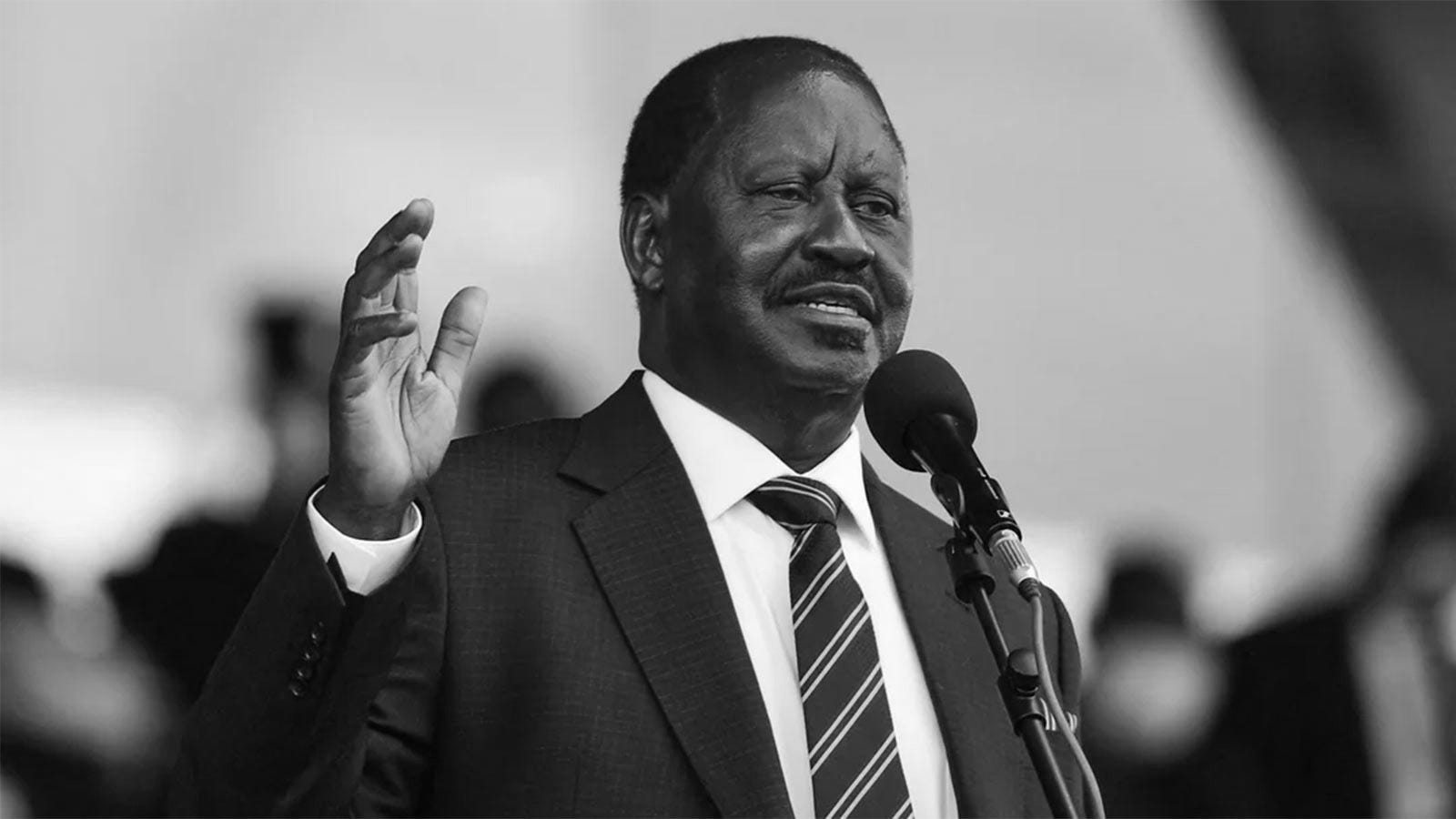
A great man died a few days ago in Kenya. Raila Odinga: leader, icon, lightning rod. He passed away in India, and with his death, everything we’ve refused to heal has come rushing back to the surface.
The Airport and the Nation’s Pulse
When news broke that Raila Odinga had died, shock spread like wildfire. Within hours, the announcement ignited the nation. Flight RAO001 from India became the most tracked in the world as people waited breathlessly for his body to return home. Crowds surged into the airport, breaking through barricades to receive their son one last time. The raw emotion, the desperate urgency to touch history, wasn’t chaos. It was love in its most primal, communal form.
Many of us Kikuyus watched in silence. Some understood; others judged. But if you’ve ever lost someone who embodied your struggle, you recognize that kind of mourning. It’s not just for a man. It’s for everything he carried. It was the grief of a people who have never been allowed to fully heal.
The Polarization of Legacy
Raila was both beloved and reviled: a man whose very presence stitched together hope and pain in equal measure. For many, he was the voice that never surrendered democracy. For others, he symbolized disruption, an old political order refusing to die.
Death, however, should humble us all. It is everyone’s final path, the one thing that strips away our pretenses. Death should never be a reason for anyone to rejoice, or worse, to claim as proof of divine intervention. To think that God orchestrates one person’s death for another’s benefit reveals a spiritual confusion that masquerades as faith.
Yet his passing has reignited tribal wounds that were never cleaned, only bandaged with time. Governor Kahiga’s remarks were reckless and unfortunate: a reminder that grief and politics make dangerous companions. But the speed with which one man’s words became justification for collective condemnation reveals something deeper about how we’ve chosen to remain divided.
What troubles me most is the predictability of it all. Politicians seize these moments like vultures, transforming individual failures into tribal ammunition. And because we’ve never truly healed from our foundational wounds, we fall for it every time.
The Cycle We Refuse to Break
We’ve walked this path before. In 2007, when the Rift Valley burned. In 2013, when the ICC cast its shadow. In 2022, when alliances reshuffled under the same tired script. Each time, the pattern repeats: one side celebrates, another grieves, and politicians feast on our pain.
The wound runs deeper than elections. It began after independence, when Jomo Kenyatta and Jaramogi Oginga Odinga (once brothers in struggle) became symbols of tribal division. Their fallout became our inheritance. Each generation since has been quietly taught who the enemy is.
But perhaps the most tragic part is how we’ve learned to weaponize individual actions against entire communities. When one person’s words become justification to punish millions, we reveal that we’ve learned nothing from our history. When communities rally behind corrupt leadership simply to spite another tribe, they participate in their own destruction. This isn’t politics. It’s collective self-harm disguised as justice.
Lessons from Rwanda
Sometimes I think about Rwanda: a nation once torn apart by genocide that somehow found courage to face its own reflection. Rwanda chose the long, painful path of accountability, truth-telling, and collective healing. They sat in their discomfort and built a future from it.
Kenya buried its trauma under political convenience. Every election cycle reopens that grave, and we act shocked at the stench. We never built the structures of truth or reconciliation that Rwanda demanded of itself. We chose amnesia over honesty, and that’s why we keep circling the same wound.
The Politicians and the Puppeteers
Politicians and bloggers are already monetizing this moment: turning grief into currency, outrage into power. What should have been national reflection has become a marketplace of narratives.
I had hoped 2027 would be different. That we’d choose leaders based on merit, not tribe. That maybe, for once, Kenya would rise above scripts written decades ago. But I see the familiar choreography beginning: outrage, division, silence, amnesia.
Still, even in this cycle, voices speak truth. People exhausted by manipulation, tired of swinging between victimhood and superiority. These are the ones who still believe in Kenya: not as a flag, but as a possibility.
A Message to My People
To my fellow Kikuyus: we find ourselves, once again, carrying collective guilt for individual actions. This too is part of the cycle: the expectation that we must always bow our heads, always apologize, always prove our worthiness to belong in our own country.
But guilt is not ours to carry for another’s words. Shame is not the price we must pay for existing at the center of Kenya’s story. We too have loved this country, built it with our hands, mourned its failures and celebrated its victories. We’ve never lacked industry or resilience, and our survival has never depended on political mercy.
The economic realities that bind us (expensive fuel, costly food, failing infrastructure) affect us all equally. Our votes buy us the same struggles as everyone else’s. In the end, bad leadership is a burden we all share, regardless of tribe.
So let us walk with dignity: not in arrogance, but in the quiet knowledge that we belong here too. Let us refuse to be perpetually on trial for our identity, while remaining open to growth and accountability when it’s truly warranted.
Closing Reflection
Perhaps one day we’ll learn that emotion isn’t weakness: that grief, pride, and pain can coexist without becoming hate. Until then, we keep watching the same film, each generation inheriting the same unfinished story.
The question remains: will we ever stop performing our wounds long enough to heal them?
Author’s Note
I’m not a political analyst. I’m a Kenyan woman watching her country repeat old wounds in new language. I write this not to take sides, but to reflect on what happens when emotion, history, and politics collide. His death has brought back everything we’ve buried: from the unspoken pain of independence to the tribal reflexes that still define our choices.
This isn’t about blame. It’s about the honesty we owe ourselves if we ever want to stop orbiting the same wound.
About the Author
Nyambura explores the intersection of ancient wisdom and modern transformation through writing, AI-assisted shadow work, and authentic spiritual guidance. She believes the best teachers are eternal students willing to share their real process rather than their imagined perfection.
Connect: 🌐 inkandshadowtales.com 📸 Instagram: @whispersofthemoth ✉️ info@inkandshadowtales.com