The Indispensable Trap: How Over-Giving Creates the Abandonment It Fears

I grew up as the second-born. My older brother drank and drew the spotlight through crisis. My younger sibling was delicate, beautiful, endlessly adored. I was somewhere in the middle: invisible unless I worked for love.
That invisibility carved a wound in me: “If I give enough, they’ll keep me. If I carry the weight, maybe I’ll be seen.”
So I learned to over-give. In relationships, friendships, work. I gave my time, my energy, my skills, my heart. At first, it worked. People were grateful, even delighted. But soon, something shifted. Gratitude turned to expectation. Expectation calcified into entitlement.
That’s when I learned the truth: “Over-giving does not build loyalty. It breeds entitlement.”
The Middle Child’s Bargain
Each sibling position creates its own survival strategy:
The first-born becomes duty-driven, holding everything up until they burn out.
The last-born becomes the charmer, softening and pleasing to ensure they’re loved.
The middle child becomes the invisible over-giver, proving worth by filling the cracks no one else notices.
I learned to scan every room for what was missing and become it. Someone needs comfort? I’m there. A project needs saving? I’ll work through the night. A friend needs support? I’ll drop everything.
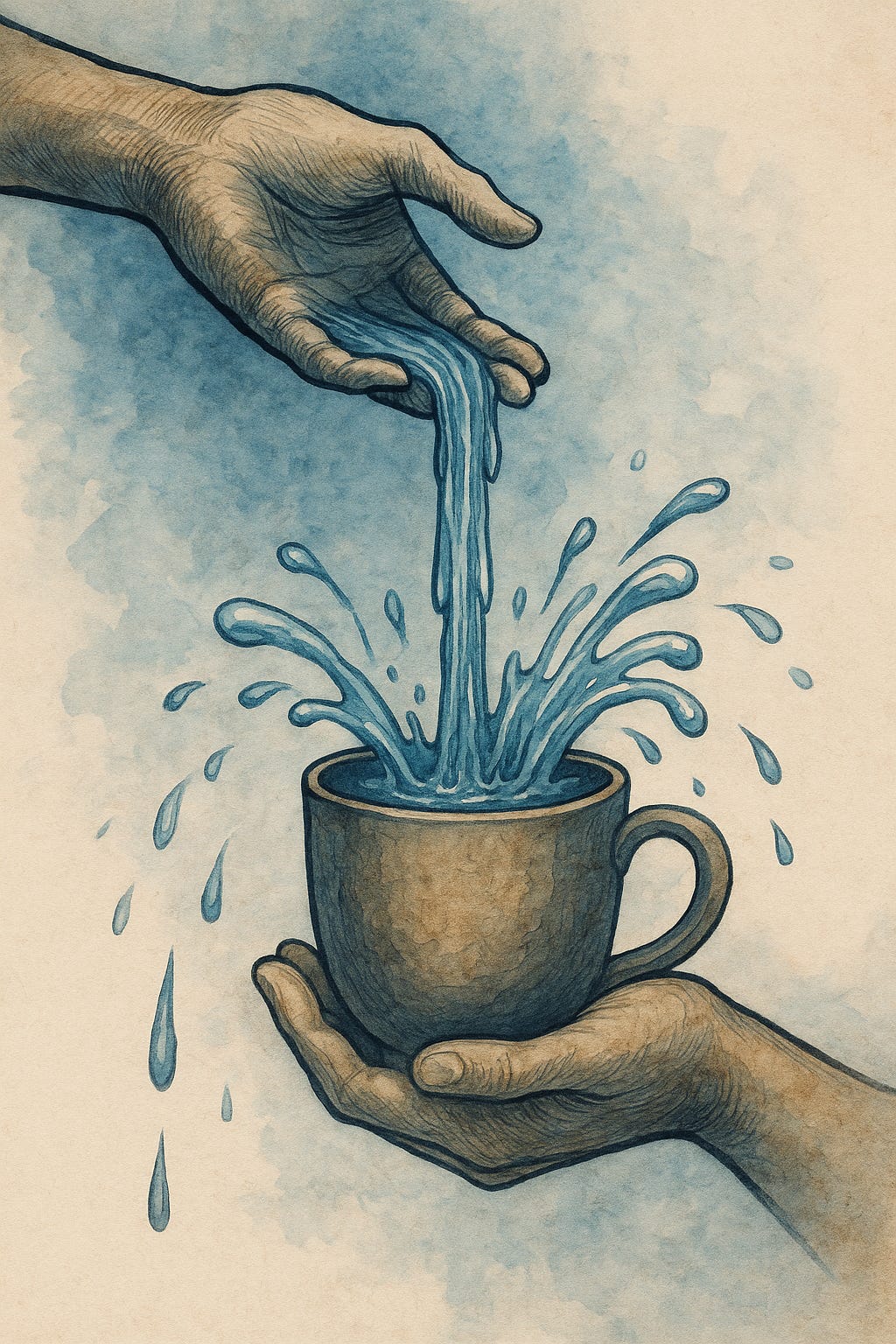
But here’s what I didn’t understand: when you make yourself indispensable by always giving, people stop seeing the cost. They stop seeing you at all.
“You become a function, not a person.”
Making Myself Your Addiction: A Scorpio’s Confession About Over-Giving
I can’t name this pattern without naming my astrology: Mars, Saturn, and Pluto all clustered in Scorpio in my 2nd house of self-worth.
Scorpio doesn’t do anything halfway. It’s the archetype of I Desire—all-or-nothing, demanding soul bonds rather than surface connections. In the 2nd house of value and worth, that intensity turns giving into obsession.
For me, giving was never casual. It was merging. It was staking a claim: “If I pour this much of myself into you, you can’t leave.”
But here’s the darker truth I’m only now admitting: I wanted to make myself indispensable. Not just helpful—necessary. I studied what people needed and became it. I wove myself so deeply into their lives that extracting me would leave a hole.
And I didn’t just give my time and energy. I gave money, resources, access to everything I had. People called me generous, and I was. But I also know the truth: “I was buying insurance against abandonment. Every dollar I gave was another thread in the web, another reason they couldn’t leave without losing something essential.”
With Scorpio in my 2nd house, even money became a weapon—every gift, every loan, every rescue was me buying my place in someone’s life.
This is manipulation dressed as generosity. I told myself I was being loving, but I was actually being controlling.

Scorpio’s Scorched Earth Policy
The strategy worked exactly as designed: people did need me. They did rely on me. They couldn’t easily leave. But here’s what I didn’t calculate: “When someone stays because they need what you provide rather than who you are, resentment builds on both sides.”
They resent needing you. You resent that they only stay for what you give.
And when resentment boils over, Scorpio emerges in its other face: the sting.
When I sense betrayal—real or imagined—when entitlement grows too heavy, I don’t just leave. I either explode in volcanic rage or vanish into ice-cold silence.
The eruption: screaming truths that scorch the earth, revealing every resentment I’ve been storing, making sure the bridge burns so hot no one could ever rebuild it.
The vanishing: blocking, deleting, disappearing without explanation. Absence as a weapon.
“Scorpio doesn’t just leave. It makes absence into a haunting. If my presence didn’t keep you, my disappearance will remind you what you lost.”
The Receiver’s Complicity
It’s tempting to paint myself as the only one with a shadow here, but over-giving warps the receiver too.
At first, they feel special, chosen, deeply cared for. But as my giving continues without pause, without boundaries, something shifts in them. They stop noticing the effort. They stop saying thank you. They begin to expect what was once a gift.
And when I finally pull back, exhausted and resentful, they feel betrayed—as if I’ve stolen something that belonged to them.
This is the shadow bargain: “I give from need, they receive from entitlement, and we both pretend it’s love.”
Breaking the Pattern
Here’s what I’m practicing now:
Notice the hook. When I feel the urge to over-give, I ask: What am I trying to buy with this?
Name it honestly. Sometimes I literally say: “I want to give this because I’m scared of being left.” Naming it breaks the spell.
Give from fullness, not fear. If I can’t give without needing dependence in return, I don’t give.
Let people choose me, not need me. If someone only stays because they rely on me, that’s not love—it’s a hostage situation I created.
The Truth About Loyalty
I thought over-giving would create unbreakable bonds. Instead, it created transactions. I thought bleeding myself dry would make me irreplaceable. Instead, it made me invisible.
“Real loyalty doesn’t come from exhausting yourself to keep someone close. It comes from showing up as yourself, boundaries intact, giving from overflow rather than emptiness.”
The middle child in me is still learning this: I am not invisible when I stop over-giving. I am not unworthy when I draw the line.
“My worth was never in what I could provide. It was in who I am when I stop performing for love.”
That’s the wound, and that’s the medicine.
P.S.
This pattern of over-giving to create dependency? It’s directly tied to worth wounds. Right now I’m working through The Money Shadow Workbook again, because the same wound that makes me give everything away to feel valuable is the wound that shapes how I earn, spend, and relate to money.
If you want to explore your own patterns around giving, worth, and financial boundaries, here’s the Amazon link to the workbook. If you’re in Kenya, message me and I’ll connect you to where you can get a copy locally.
And if you’re ready to work through these patterns in community, come join my Shadow Work Community on WhatsApp. We’re building a space where we can name these shadows without shame.
About Nyambura
Nyambura is a spiritual technologist exploring the intersection of ancient wisdom and modern transformation. She creates AI-powered wellness tools for shadow work and spiritual reckoning, writes about consciousness in the digital age, and helps others navigate the paradox of healing in a world obsessed with optimization.
Connect:
🌐 inkandshadowtales.com
✉️ info@inkandshadowtales.com
📸 Instagram: @whispersofthemoth