How Do We Take Our Place in the World Without Pushing Others Out of It?

I went to Mount Kenya with an intention.
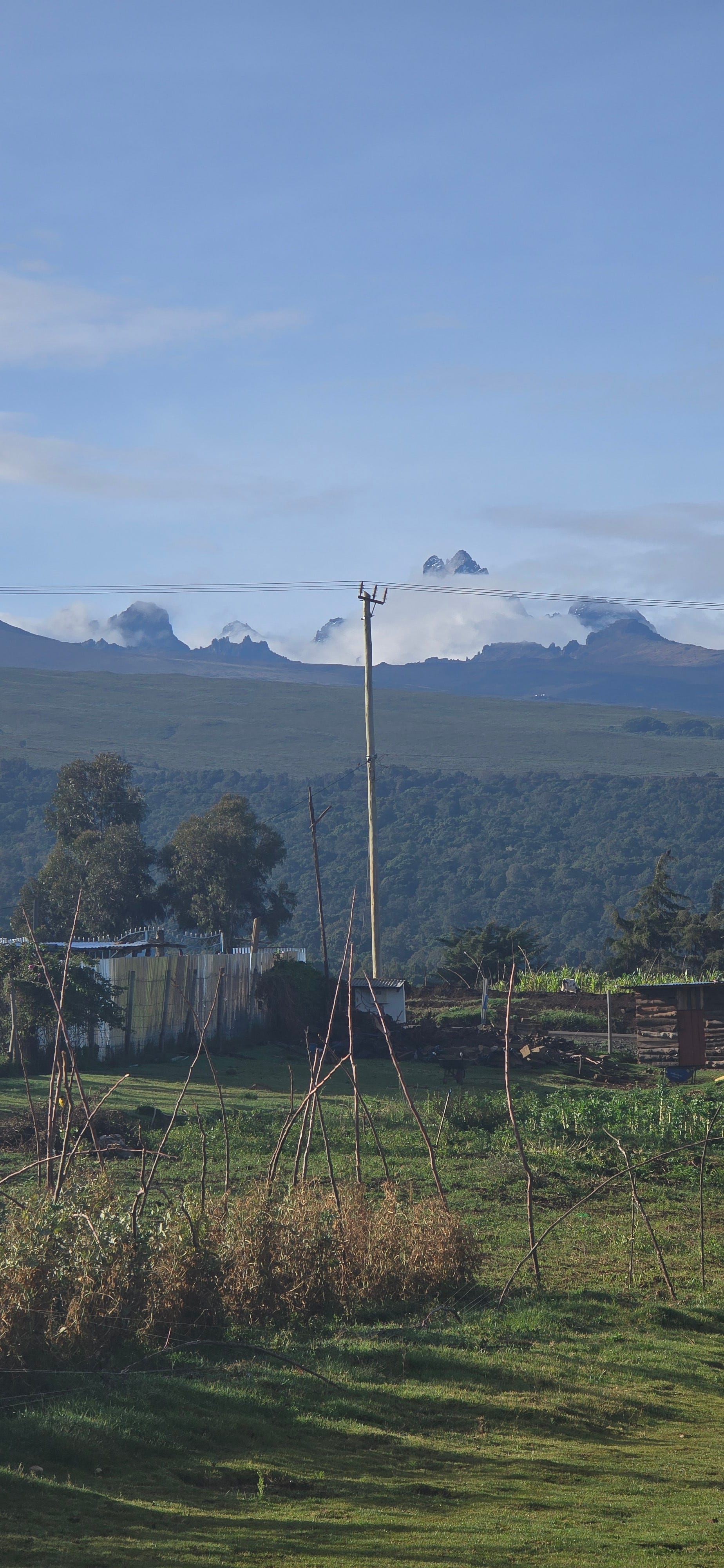
I wanted to ground myself. Connect to my roots. Touch something old in the land and let it touch me back. I had been carrying a question I couldn't quite name, something about scarcity, about belonging, about whether I was allowed to take up the space I actually occupy.
The land answered in a way I wasn't expecting.
During a ceremony on the mountain, I found myself on the ground. Not sitting. Not meditating quietly the way I had imagined. My body was moving, spreading, pressing itself into the earth. I was making sounds I didn't plan to make. I kept hugging the grass. I felt the ground moving beneath me, or maybe I was moving into it. I couldn't tell the difference.
At some point I became something large. Something that wanted to stretch and spread and take up more room than I normally allow myself. A dragon. A grasshopper. Something ancient that doesn't ask permission.
And my mind kept resisting.
*Sit still. Be composed. Let the messages come through properly.*
But my body wouldn't listen. It had its own intentions.
At some point a voice came, not mine, older than mine, something that could see me more clearly than I could see myself.
When will you release her.
Not a question. A recognition.
Then our guide sang a Kikuyu song.
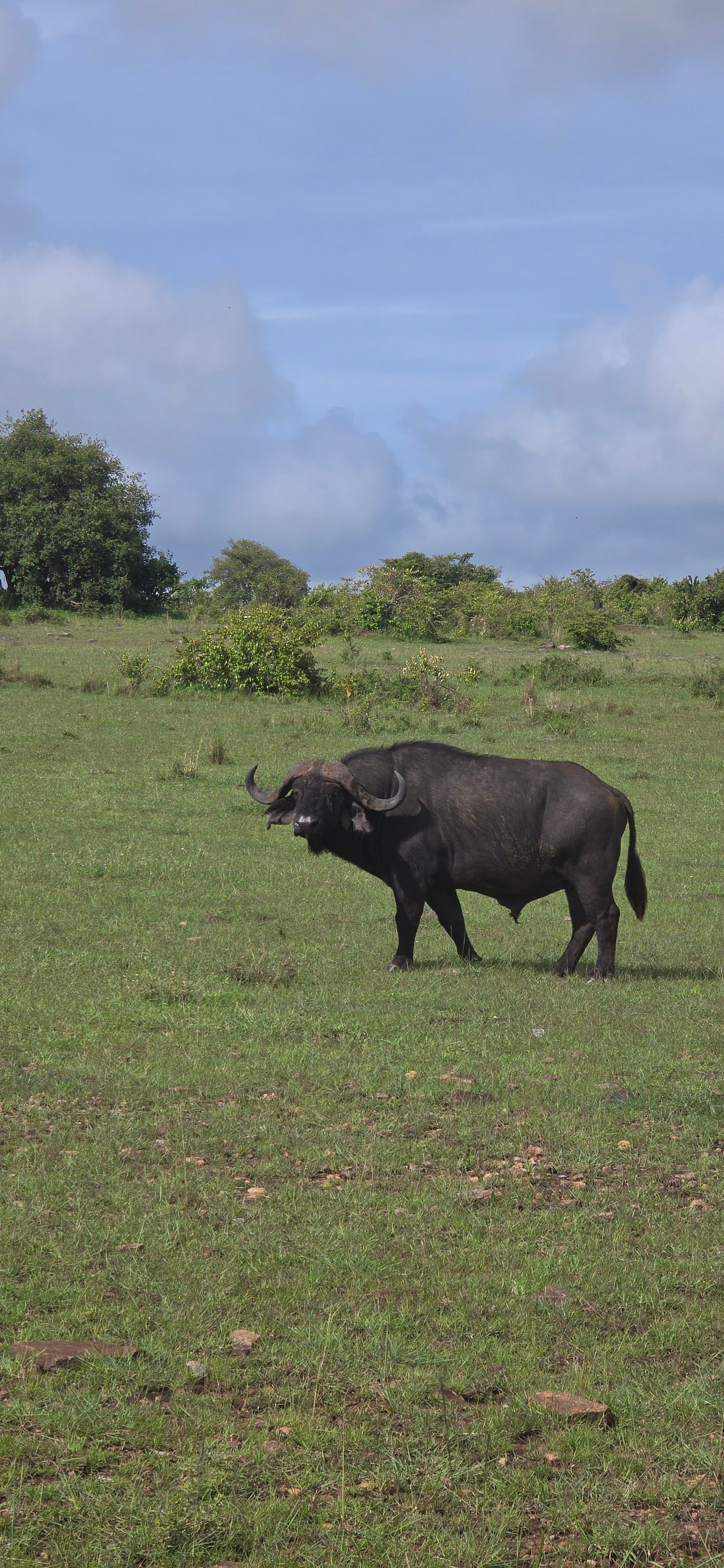
*Whose home is this, whose home is this, so that I may spread myself like a buffalo?*
The response came back, simple and unhesitating:
*This is our home. If you want to spread yourself, spread.*
I heard those words while I was already on the ground, already sprawling, already becoming something that refused to be small.
And I thought: I would never do this anywhere else.
Not in the West. Not in a borrowed landscape. Not somewhere that doesn't know my name or my people or the particular way my body holds grief and history and hunger all at once.
Only here. Only on land that recognized me before I recognized myself.
The buffalo doesn't ask permission because it is powerful. It asks because it understands the land is shared. And the land says: *yes, there is room. spread.*
I had come to the mountain asking if I was allowed to take up space.
The mountain answered before I finished the question.
A few days later I found myself reading a conversation online.
A traveler visiting Kenya wrote about something that made her uncomfortable. She had been welcomed warmly everywhere she went. People were kind, protective, generous. But she noticed she was waved through security while locals had their bags checked. She was served first. People stepped aside. She was called madam.
She felt she was being given space that wasn't hers to take.
The comments that followed cracked open something older.
Some Kenyans said: that's just our hospitality.
Others said: no, sometimes we do treat white visitors differently.
Others pointed to tourism economics. Others to colonial memory. Others to how Africans are treated when we travel abroad.
Everyone was speaking from a different wound.
And reading it, I realized the debate wasn't really about hospitality.
It was about space.
Who steps aside. Who gets priority. Who occupies the center. Who shrinks so someone else can move freely.
Kenya carries a complicated history with this question.
Colonial systems once placed Europeans above Africans socially and politically. Some of those gestures still echo, so quietly that people perform them without knowing why.
Tourism adds another layer. Visitors often represent income and opportunity. Sometimes hospitality and economic survival become difficult to separate.
So what a traveler experiences may be several things at once: genuine warmth, historical pattern, economic calculation. All of it real. All of it tangled.
Hospitality welcomes someone into a space. Hierarchy rearranges the space around them. They can look identical from the outside. But one leaves everyone standing. The other asks someone to step aside.
But underneath the debate is the same question the buffalo song asks.
*Whose home is this?*
And the answer matters, not just culturally, but personally.
Because I have spent most of my life doing the opposite of spreading.
I have moved through rooms carefully. Monitored how much space I occupy. Checked whether my presence was too much before allowing myself to fully arrive. Given deference I didn't consciously choose to give, to keep the peace, to make room, to avoid being seen as someone who takes too much.
I told my guide during the ceremony: I don't like surveillance. I don't like being seen.
And he heard it as what it was, not humility, but confinement.
The same confinement the traveler's story revealed in a different form. She was given space she didn't ask for. I give away space I was never asked to surrender.
Two different positions. The same imbalance around who is allowed to take space, and who has quietly agreed to need less of it.
The voice on the mountain asked: *when will you release her.*
I don't have the full answer yet.
My body knows. It was already on the ground, already spreading, already making animal sounds in its native land without apology.
But my mind held back. It kept wanting to compose itself. To receive the journey properly. To be seen doing it right.
The medicine kept saying: *listen.*
Maybe that is the truest answer to the question this essay started with.
How do we take our place in the world without pushing others out of it?
We stop performing smallness as a courtesy.
We stop mistaking confinement for consideration.
We ask whose home this is, and when the land answers *ours*, we let ourselves believe it.
Sometimes I wonder how many of us are quietly negotiating the same question in different ways.
Where did we learn to step aside before anyone asked us to?
Where did we learn that taking our place might mean pushing someone else out of theirs?
And what would change if we believed the answer the land gave that day on Mount Kenya:
*There is room. Spread.*
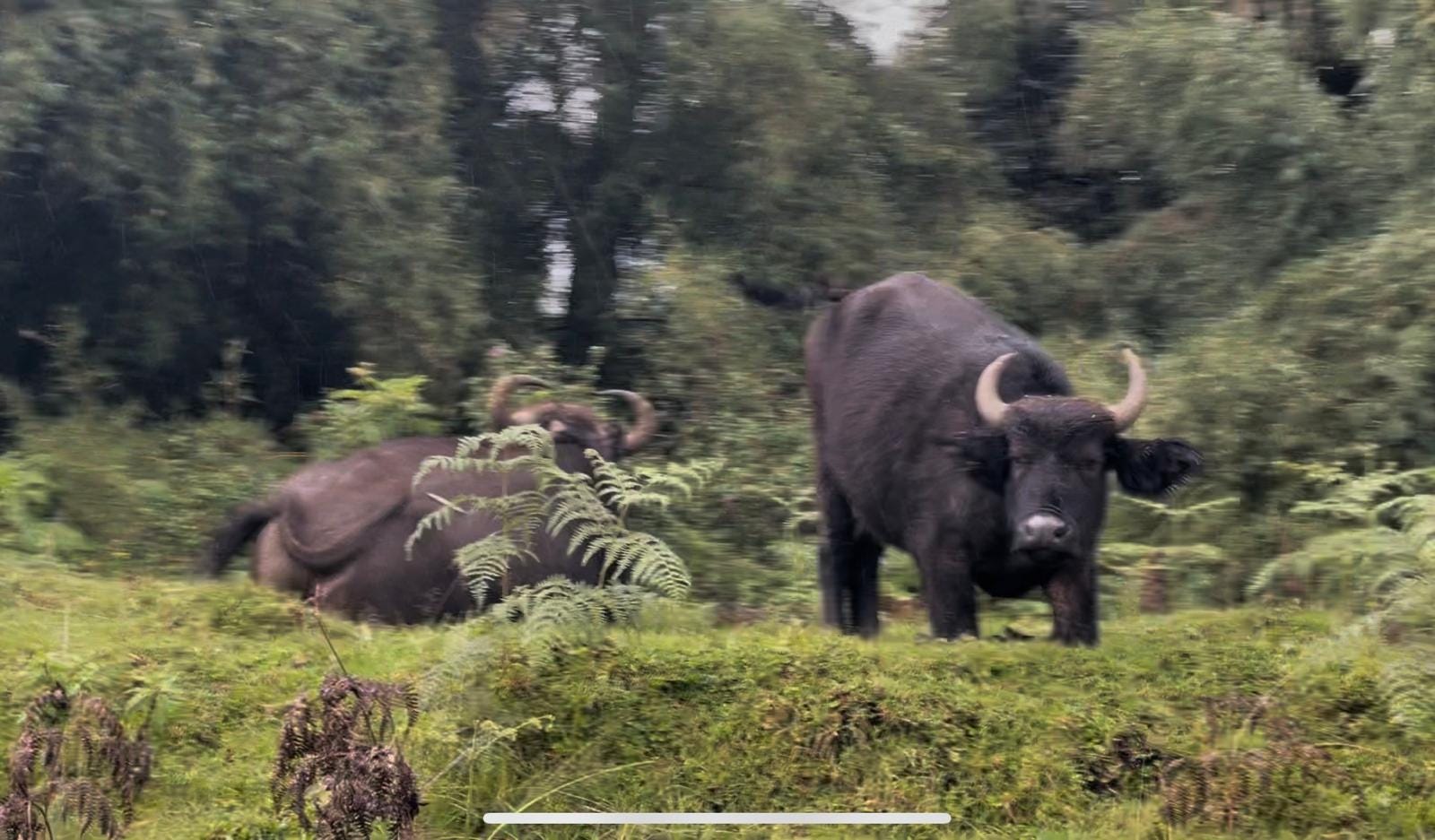
The buffalo doesn't dominate the land.
It doesn't disappear from it either.
It simply spreads, fully, without apology, in the place it belongs.
I am still learning to do that.
P.S.
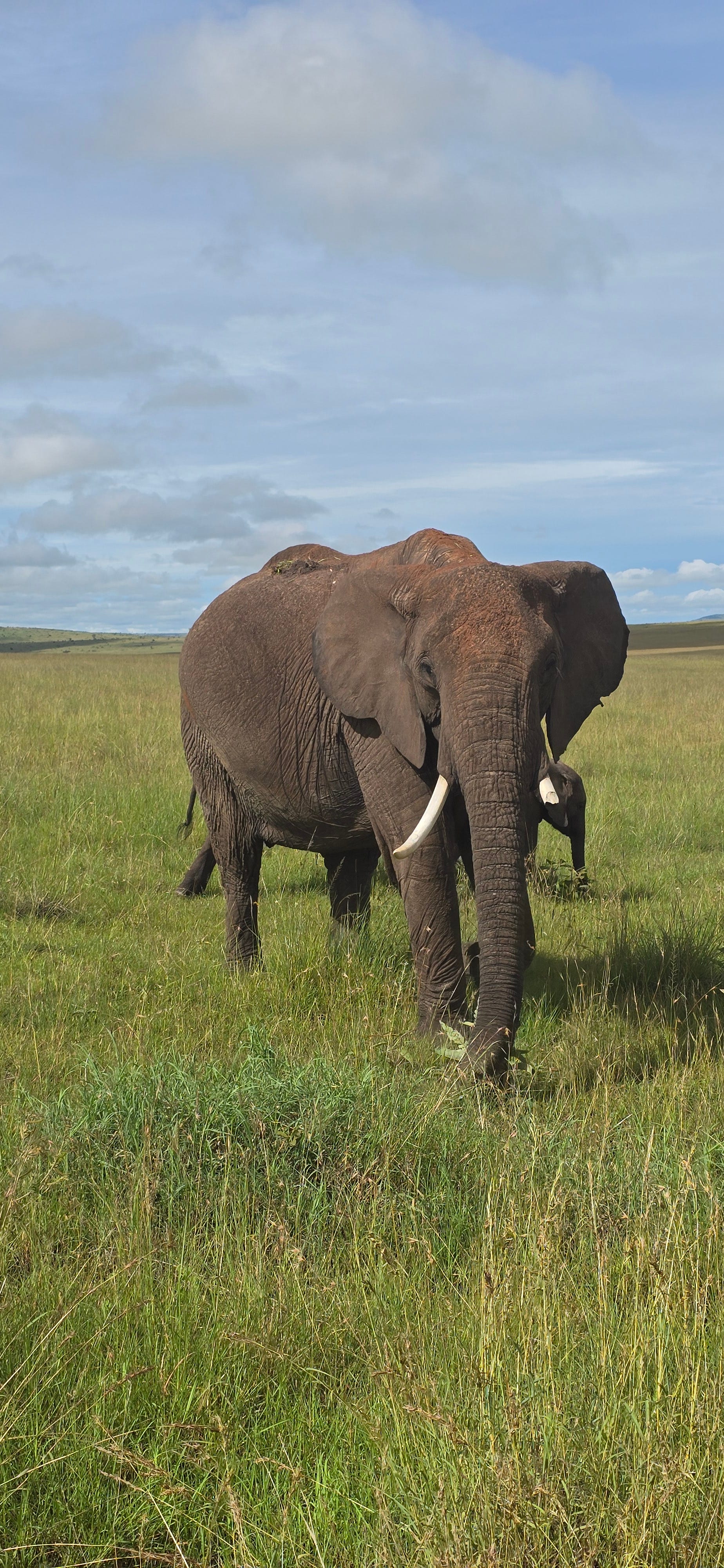
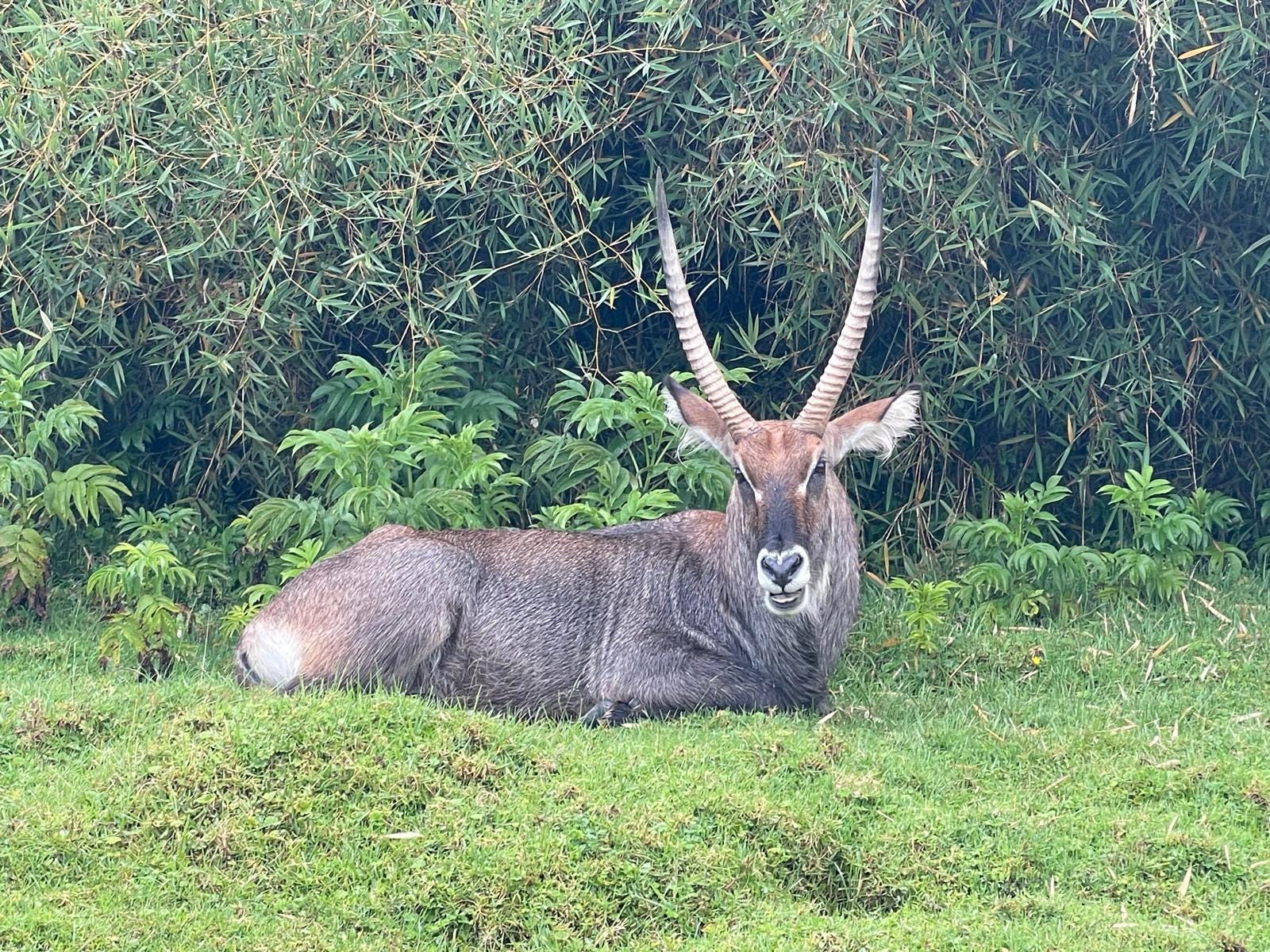
I know I wrote a lot about buffalo because of the song. But the truth is the mountain and the Mara were full of reminders — elephants, waterbuck, buffalo — all large, calm creatures simply existing in their space.
The land seemed determined to make its point.
Beautiful sis, thank you for all the magic at Mount Kenya 🤗💖✨🙏🏽🙏🏻