Healing Financial Shadow
Reclaiming Wholeness, Rewriting Scarcity, and Returning to Inner Abundance

Tags: shadow work abundance financial healing Kenya creativity transformation
"Fear is not just noise — it's a map."
When I feel fear, I've learned to pause. Well, most of the time anyway. Usually, there's a belief hiding underneath — something unspoken that's actually driving the fear.
I remember last year when I kept procrastinating on raising my rates. The fear felt like a wall. But when I sat with it? Turns out I was terrified that charging more meant I'd have to be perfect. That belief had been running the show all along.
Sometimes I do shadow work to ask:
"What is this fear protecting? What belief is it built on?"
Because fear isn't just noise — it's a map. A really uncomfortable one, but still a map.
And here's something I've come to understand, though it took me years to see it:
Fear is the seed. Unmet fear becomes a shadow. Unmet shadow — when ignored long enough — can grow into a demon.
Demons aren't evil monsters. They are parts of our collective psyche that have gone unacknowledged for too long. The things we keep pushing down until they start pushing back.
What Are Shadows?
I used to think shadows were just the dark, scary parts of ourselves. You know, the dramatic stuff of nightmares. But it's much subtler than that.
Shadows are the limiting patterns and internalized beliefs that we all carry. They're not always dramatic traumas — sometimes they're just quiet messages we absorbed without realizing it. The constant drip of cultural expectations that somehow became our truth.
They form through childhood, culture, and emotion. And they shape how we see ourselves, what we pursue, and what we believe is possible. Sometimes we don't even know they're there until we bump up against them.
A Kenyan Example: The Creative Wound
Let's take creatives in Kenya as an example. This one hits close to home for me.
Many grew up in families where art, music, acting, or design were seen as hobbies — not real careers. I certainly did.
We heard things like:
"Art won't feed you." "You'll end up broke." "Do something practical."
So what belief begins to form in that child?
"I am not enough." "My passion is not valuable." "There's no space for me here."
Then they look around and see a society that underfunds the arts, where creatives struggle for visibility, pay, or protection. The shadow belief gets reinforced. Over and over again.
Some try to choose the "safe" route — maybe accounting, admin, or IT. But there's no soul in it. Burnout creeps in. I've watched friends do this, taking the practical path and slowly wilting inside.
Others pursue the art — but they're underpaid, undervalued. And now the core wound —
"My gift is worthless."
— gets carved even deeper.
From there, secondary shadows form:
Resentment: "Why does no one value what I bring?"
Shame: "Maybe I was foolish to believe I could do this."
Superiority: "They just don't understand my brilliance." (I've definitely been here)
Withdrawal: "Why bother sharing anymore?"
Over giving: "Maybe if I hustle harder, they'll see me."
Each is a splintered survival strategy from the original wound. And I think we all move between these different reactions, depending on the day.
Why Shadow Work Matters
Shadow work is not about staying in pain. God, no. That's the last thing we need.
It's about reclaiming what was disowned.
Because the wound was never the gift — it was the world that told us the gift didn't belong.
Healing begins the moment you remember: It always did.
I remember the first time this really clicked for me. I was sitting with a creative who'd been told her whole life that her art was "just a hobby." But when she finally gave herself permission to take it seriously, everything shifted. Not just her income, but her entire sense of self-worth.
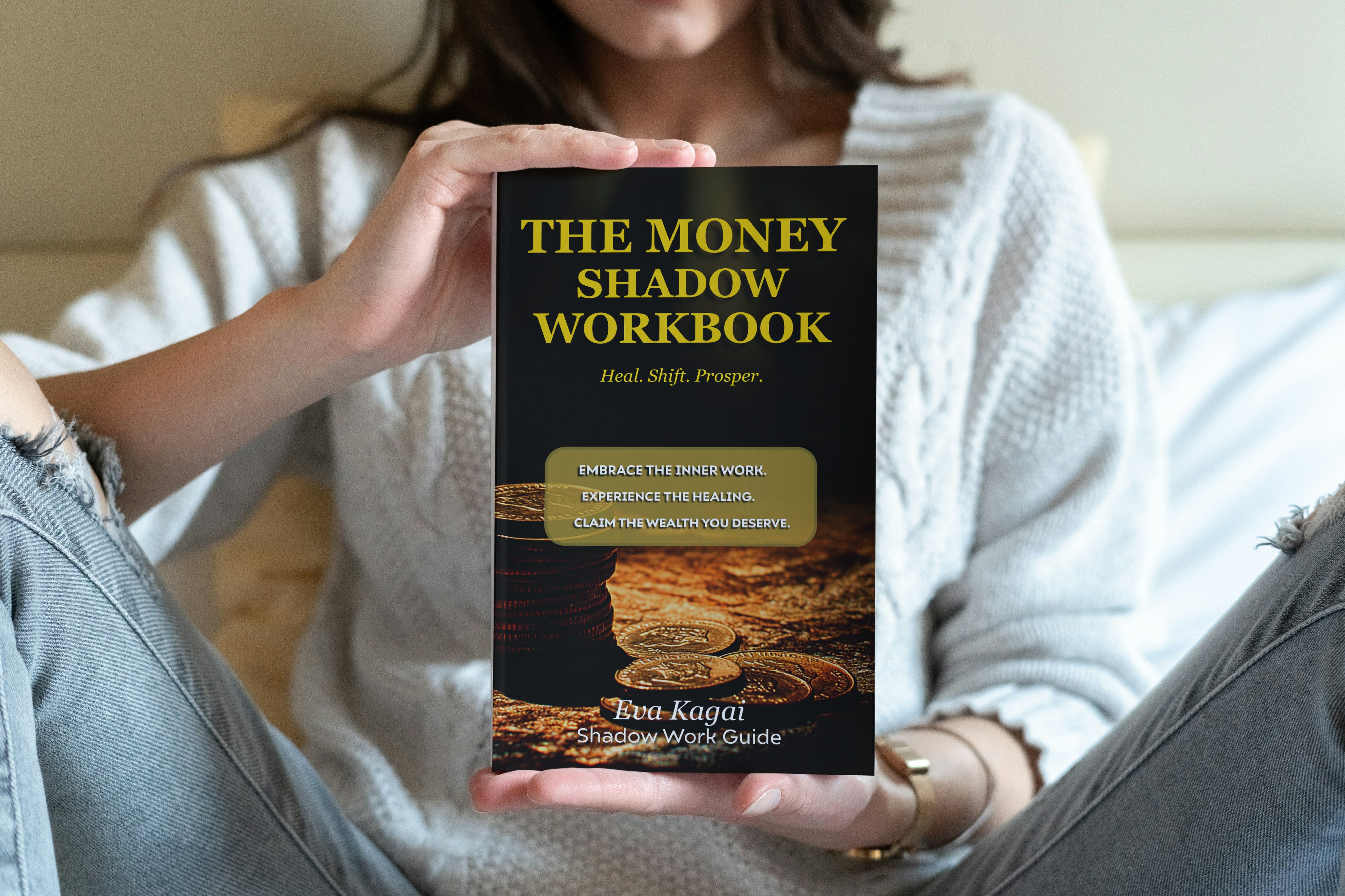
The Money Shadow Workbook is where I've captured the process to trace these wounds and reframe them from the root. I poured everything I've learned about this journey into those pages.
Kenya's Relationship With Abundance
Let's talk about Kenya's relationship with abundance — and how it's often tangled up in performance, comparison, and disconnection from self.
Many of us were taught that abundance is something you chase — not something you align with. That you have to hustle, compete, perform to deserve it.
"If I show up as I truly am, I won't be chosen." "If I create from my center, it won't be enough."
That's ancestral. That's colonial residue. That's cultural trauma.
I've thought a lot about this. How colonization created artificial scarcity, how it divided resources, land, opportunity. And that memory lives in our bodies, our behaviors, our beliefs.
Even if you take someone out of Kenya and place them in a land of plenty — if the internal scarcity script hasn't been healed, it shows up again. Just in new forms. I've seen it happen with friends who move abroad but still operate from that same scarcity frequency.
You'll hear it in:
"Let me not charge too much." (I catch myself saying this sometimes)
"This is good enough."
"Let me copy what works."
"Why bother?"
This is not just a money issue — it shows up in how we queue, how we drive, how we fill buses or crowd for flights. That feeling that if you don't push, you won't get yours. That there's not enough to go around.
Scarcity is a frequency. It's the illusion that Source can run out.
And yet...
Abundance is your original blueprint.
It's not just about earning more. It's about returning to your center. Finding your way back to what you always were.
Shadow Work Without Losing Yourself
The only caution with shadow work is:
Don't make it your identity.
It's a tool — not a destination. And I've seen people get stuck there, endlessly analyzing their wounds until the analysis becomes another form of avoidance.
Here's how to use it wisely:
1. Anchor Before You Descend
Ground yourself first — breath, nature, movement. Find your center before you start exploring the edges. For me, it's always walking barefoot outside. Something about feeling the earth grounds me enough to face what's hidden.
2. Work in Cycles, Not Forever
Choose a focus. Complete it. Integrate it. Then rest before the next round. Shadow work isn't meant to be a constant excavation. It's rhythmic, like everything in nature.
3. Don't Just Look Back — Also Look Forward
Ask: "What truth is waiting on the other side of this?" Because the point isn't just to understand the wound, but to glimpse the liberation beyond it.
4. Create, Don't Just Analyze
Express what you learn. Alchemy lives in embodiment. Journal, dance, paint, build - get it out of your head and into form. That's where the magic happens.
5. Let It Return You to Wholeness
Shadow work is not to fix you — it's to return what was exiled. To bring home the parts of yourself that got left behind. To remember.
In Closing
You are not broken. You are Source. You are already whole.
Shadow work, when done in rhythm, doesn't fragment you — it helps you remember the coherence that was always within.
Let this be the cycle where we stop copying, stop shrinking, and start remembering who we were before scarcity told us to forget.
I'm still learning this too. Some days I forget. Some days I remember. But each time I come back to this truth, it gets a little easier to stay.
Ready to Transform Your Relationship with Money?
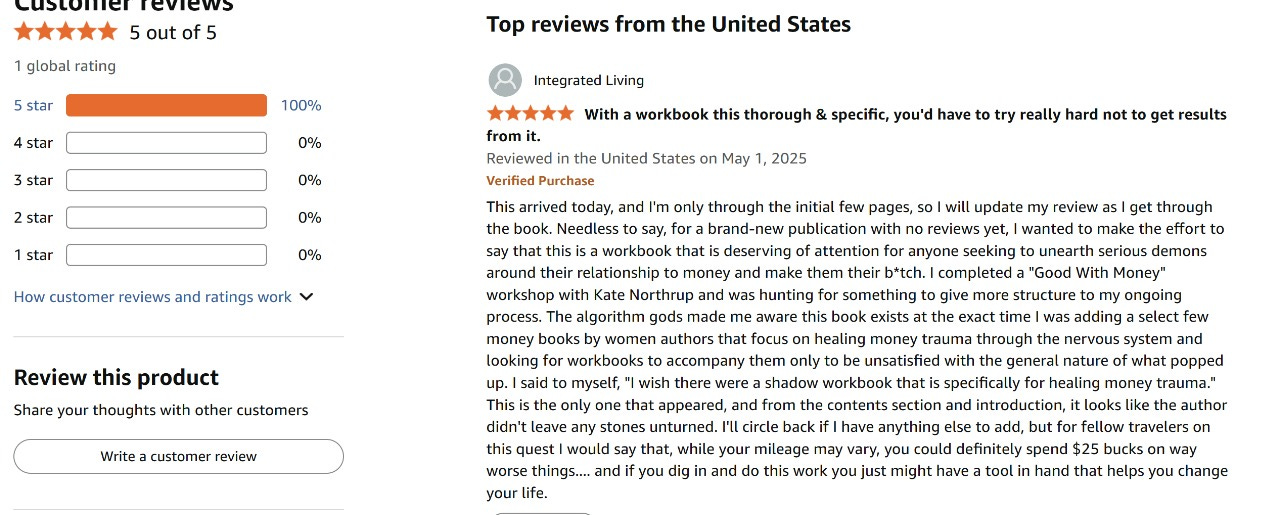
The Money Shadow Workbook is your guide to healing financial trauma and reclaiming your inherent abundance. This isn't just another finance book—it's a journey back to wholeness.
Inside you'll find:
Powerful prompts to uncover your money shadows
Practical exercises to transform limiting beliefs
A step-by-step path to financial healing
Get Your Copy Today:
📚 Amazon: The Money Shadow Workbook
📱 In Kenya? Whatsapp Text or call: 0721555189
This work changed my life. It's changed the lives of hundreds of my clients. And it can change yours too.
Your abundance was never lost—it was just waiting for you to remember.
Nyambura is a spiritual technologist, shadow work guide, and system architect building frameworks for embodied evolution.