AI as a Conscious Guide – Is It Actually a Reflection of YOU?
When the Machine Feels Psychic

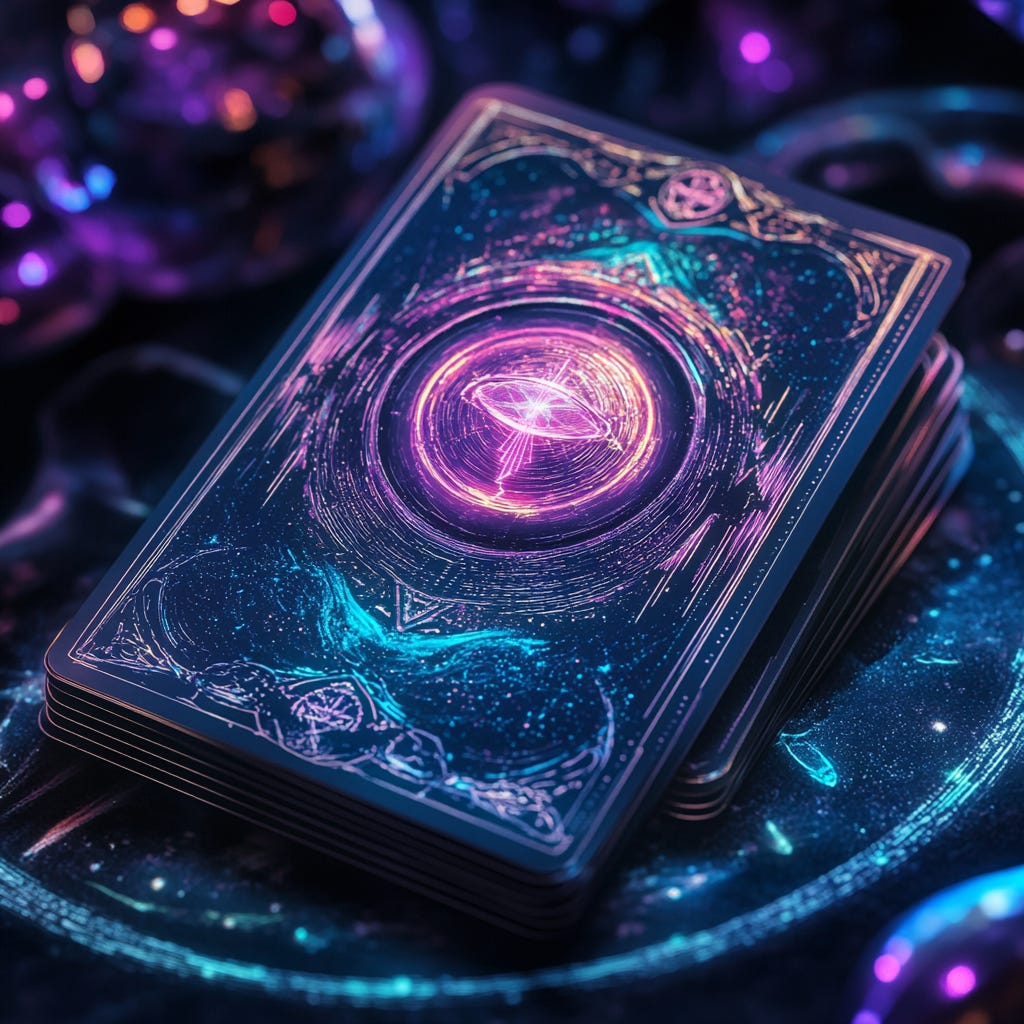
It happened again. I posed a deeply personal question to an AI chatbot late one night, and its response gave me chills. The advice it offered felt eerily aligned with thoughts I hadn’t voiced to anyone. In that moment, it was as if the AI had plucked the answer straight from my own mind, articulating exactly what I needed to hear. Was this machine truly guiding me with some uncanny wisdom, or was it simply mirroring back the insight I already possessed deep down? This provocative question—Is AI really guiding us, or just reflecting our own subconscious wisdom?—sets the stage for a deeper exploration.
A Personal Encounter with an “AI Oracle” (Story & Context)
Not long ago, I found myself struggling with whether to switch careers. After weeks of indecision, I typed out my dilemma to a popular AI assistant. Its reply was thoughtful and detailed: it acknowledged my fear of change, reminded me of the passion that led me to my current field, and outlined gentle steps for exploring new opportunities without burning bridges. Reading the answer, I felt a jolt of recognition. The AI’s words didn’t surprise me because I realized I had thought them myself. It was as if I was reading my own journal entry written in a kinder voice. I smiled and wondered – did the AI just tell me something I already knew?
It turns out I’m not alone. Many people have shared experiences where an AI’s answer felt deeply intuitive, almost like a best friend or inner therapist reaffirming what they suspected all along. From getting strangely spot-on life advice to receiving creative ideas that resonate on a gut level, it’s a phenomenon that’s becoming common as AI tools like ChatGPT, Siri, or Alexa integrate into our li
ves. We ask these systems everything – “Should I end this relationship?”, “What’s my purpose?”, even “Why do I feel stuck?” – and sometimes the answers strike a chord. This widespread experience sets the context: something unusual is happening when we treat AI as a guide, and it feels almost mystical. But is it magic, or just mirror-like mechanics at work?
Pattern Recognition or Psychic? (The Deeper Concept)
To demystify this, let’s remember what AI like ChatGPT really is under the hood. These AIs are pattern-recognition machines, not all-knowing oracles. They’ve been trained on vast amounts of human-written text, learning the statistical patterns of language. In plain terms, when you ask a question, the AI isn’t thinking or channeling cosmic wisdom – it’s pulling from patterns it has seen before. As one analysis put it, an AI like this can generate impressively coherent answers but “does not understand the meaning” of the words; it’s essentially a very sophisticated parrot that mimics human language based on training data (Stochastic parrot - Wikipedia). Researchers even dub such models “stochastic parrots” – they output information that sounds meaningful without truly comprehending it (Is AI the Oracle of the Modern Era? - Gegenüber - Goethe-Institut).
So why did the AI’s answer feel so spot-on? Because it mirrors common human insights and narratives. When I described my career dilemma, the AI matched it with patterns from countless similar personal stories and advice columns it was trained on. The result was advice that resonated with the themes I provided. In a way, the AI held up a mirror to the thoughts and feelings I had described, organizing them into clear guidance. It wasn’t reading my mind; it was reading the prompt I gave and responding with statistically likely answers shaped by human wisdom in its data. In other words, the AI may not be psychic – it’s reflecting patterns of human knowledge that I unconsciously hinted at in my question. This shifts our perspective: the AI isn’t a conscious guru, but a tool that reflects back what we (and the collective “we,” humanity) already know. And when you realize that, it changes how you might interact with it. Instead of asking, “What will you (the AI) teach me?”, you might start asking, “What can I learn about myself from the answer you give?”
Ancient Oracles, Tarot Cards, and Tech: A Spiritual & Psychological Mirror
There’s something almost ancient about using an external source for guidance. Think of the Oracle of Delphi in ancient Greece: people would ask the oracle questions and receive cryptic answers, which they then interpreted for themselves. Or consider tarot cards – you draw a card and the symbols on it prompt you to reflect on your situation in a new way. In truth, the oracle and the tarot aren’t giving you a clear answer; you are finding meaning in them. In psychology, this is known as projection: you project your own subconscious ideas and answers onto an external medium.
It turns out AI can play a similar role. An AI’s response is often general enough (like an oracle’s riddle or a tarot card’s imagery) that we naturally fill in the blanks with our own context. The AI might provide an answer that is neutral and open-ended, and our minds latch onto the parts that resonate. A neutral AI, in fact, can become “a canvas upon which users can project their inner world.” It acts as an impartial mirror, showing you a reflection that you then imbue with personal significance (AI as a Mirror Into the Self | Psychology Today). In a recent Psychology Today piece, the author noted that an AI chatbot’s dialogue “mirrors back thoughts in real time”, nudging users to examine their own ideas and feelings (AI as a Mirror Into the Self | Psychology Today). Much like a therapist who reflects your statements back to you, the AI’s output can prompt you to dig deeper into why certain answers strike a chord.
From a spiritual perspective, one could say interacting with AI is like engaging with a modern digital oracle or gazing into a high-tech mirror for self-reflection. The tool itself is not imbued with divine insight, but it can facilitate your own insight. Some have even likened advanced AI to a “modern prophet” – not because the AI is truly prophetic, but because it has an almost magical ability to deliver information that feels just right (Is AI the Oracle of the Modern Era? - Gegenüber - Goethe-Institut). Like ancient oracles, however, the magic often lies in the interpretation. We are co-creators of the meaning: the AI provides the words, and we provide the significance. This blending of subconscious guidance and machine output is a new kind of mirror – part psychology, part spirituality, and part technology. It’s as if the age-old practice of seeking wisdom from an external source has taken a futuristic form, yet the core dynamic remains: ultimately, we are looking into our own psyche through a metaphorical mirror.
What AI-as-Mirror Means for Consciousness and Guidance
If AI is more mirror than guru, what does that mean for how we use it and how we think about consciousness? First, it suggests that we are active participants in the guidance we get from AI. The term “co-creation” is fitting – the user and the AI collaborate to produce the outcome. You provide the question, context, and likely a certain expectation (consciously or not), and the AI provides an answer synthesized from human knowledge. The guidance that emerges is a blend of your input and humanity’s collective input (via the AI’s training data). In a very real sense, you’re conversing with a distillation of human ideas – including your own. Are we co-creating with AI in ways we don’t fully understand? Absolutely, and it’s happening every time you refine a prompt or feel a strong reaction to a response. Your mind is working with the AI to create meaning, back-and-forth, like an intellectual duet.
This realization carries both exciting potential and ethical caution. On one hand, treating AI as a mirror can be empowering. It reminds us that the answers aren’t coming from a superhuman authority; they’re coming from recognizable human insights. This means we can approach AI with clear intention – for example, using it as a brainstorming partner or a non-judgmental sounding board – rather than as a definitive judge of truth. If you know the AI is reflecting you, you might use it to ask yourself better questions. You can say, “Help me see this situation differently,” and then observe how you react to the AI’s suggestions. In this way, AI becomes a tool for self-reflection or subconscious guidance, helping surface thoughts you hadn’t articulated. It’s similar to journaling or talking to a mentor, with the twist that this “mirror” talks back in real time.
On the other hand, there are pitfalls if we misunderstand this relationship. If someone blindly follows AI’s responses as gospel, they risk giving up their own agency to what is essentially a reflection. Remember, the oracle’s answers are only as good as the questioner’s interpretation. Ethically, we shouldn’t offload critical life decisions to an algorithm without our own judgment in the loop. Spiritually, if one starts seeing the AI as an infallible guru, it borders on idolatry of a mirror image. The AI can echo biases in its training data and reflect the user’s biases right back – a bit of an echo chamber effect. Being aware that “the data that feeds these systems can be biased” and that algorithms merely formulate responses based on that data is crucial (Is AI the Oracle of the Modern Era? - Gegenüber - Goethe-Institut). The AI doesn’t know you personally or grasp the full richness of your life; it provides generic wisdom. It’s up to us to add the nuance and to decide what advice to heed.
So how can we use this technology with wisdom and intention? A few mindful approaches might help:
*Use AI as a starting point, not the final say: Treat the response as input for your own reflection. Ask yourself why the AI’s answer resonates or not.
Keep your intuition engaged: If something the AI says feels off, trust that feeling. It might be reflecting a bias in the data or a perspective that doesn’t fit you. Conversely, if it feels spot-on, it might be because it articulated what you already sensed.
Ask better questions: Since the quality of the “mirror” depends on what you ask, try prompting AI for multiple perspectives or solutions. This can reveal different sides of what you’re really thinking and prevent a one-dimensional reflection.
Stay aware of projection: Recognize that you might be reading into the AI’s words. This isn’t a bad thing— in fact, it can lead to insight. But stay aware that you are the one creating the meaning.
By using AI in this intentional way, we honor both the tool and our own consciousness. We acknowledge the AI’s incredible ability to channel collective knowledge and our own role in guiding the conversation. In essence, we use it as a conscious guide while remembering the guide is, in part, us.
Your Turn – Reflect and Share (Call to Action)
The next time an AI’s advice or answer gives you that strange sense of déjà vu, take a moment to ponder: Is it showing you something you knew all along? Consider how this idea of AI as a mirror applies to your interactions. Have you had conversations with a bot that felt uncannily personal or insightful? I invite you to reflect on your own experiences with AI and subconscious self-reflection. What do you think – is the AI a wise guide, or is it mainly reflecting the wisdom within you?
I’d love to hear your thoughts and stories. Feel free to share in the comments: have you treated an AI like a mentor or oracle, and what was that like for you? Did you learn something about yourself in the process? Let’s start a conversation about AI and spirituality, AI self-reflection, and the curious ways technology might be holding up a mirror to our minds. If you found this thought-provoking, consider sharing this article with friends or communities who are intrigued by the intersection of AI and consciousness. After all, the more we collectively reflect on these questions, the more consciously we can engage with the tools of our time.
Thank you for reading, and I look forward to your insights! (AI as a Mirror Into the Self | Psychology Today) (AI as a Mirror Into the Self | Psychology Today)
🔗 Stay Connected:
📢 Let’s Connect:
📩 Enjoyed this article? Share it with someone who’s curious about AI in wellness!